TOP 8 CAUSES OF VITILIGO
TOP 8 CAUSES OF VITILIGO
Vitiligo is a long-time devastating disease mainly affects skin colour but majorly affects socially. Vitiligo may not be considered as skin disease as mostly nothing happens over skin.
Only colour loss is evident in vitiligo cases. In present times vitiligo has socially got important because number of patients are on rise. It has been seen after the epidemic vitiligo cases increased rapidly.
May be due to immune connections or may be due to excess intake of vitamin c related food items.
Specifically, in India lot of people who have no history of vitiligo got caught with vitiligo due to abrupt food behaviour of them.
Why vitiligo occurs ?
Now we will discuss top 8 reasons behind cause of vitiligo.
1. Odd food intake –
· taking some foods items together like fish + milk can form Ama(toxins) as per ayurveda. These formed toxin inside the body restricts proper nourishment to the immune cells.
· As a result, immune systems get into disturb mode. Now, disturb immunity backfires its own cells which produce melanin pigment.
2. Excess intake of Vitamin C-
· some people develop a habit of taking a lot of vitamin c in a way to improve their immunity. it’s been seen that people starts using AMLA in large quantity as juice which is simply incorrect way of intake.
· It may results Into accumulation of vitamin c which is in some cases starts depigmentation acting like a bleach. These can cause vitiligo spots in some cases.
3. Regular intake of junk food-
· Street food/ junk food are widely available across cities and getting more popular among young people.
· In some cases, it is getting the main reason behind many diseases related to auto immunity. Vitiligo is one of them.
4. Harsh medicines uses-
· Chemical based medicines are widely used for different diseases and for vitiligo also. Prolonged uses of these harsh chemical medicines can have adverbs impact on modi immunity.
· Normally these kinds of medicines supress the immunity causing lot of auto immune issues including vitiligo.
5. Sudden Trauma-
· It has been seen that in some cases sudden loss of a near one of dear one’s loss may result into sudden trauma.
· In such situations immunity gets affected and there are very much chances of having vitiligo like auto immune disease during that time.
6. Taking hot and cold items together-
· Frequently eating hot and cold items one another may result into immunity loss. Like in one hand taking hot Gulab jamun and in another hand taking ice cream together.
· These may attract auto immune issues and can cause vitiligo.
7. Frequent change of atmosphere/ temperature-
· Suppose a person is in his cabin at 18 o c and suddenly he moves out in 47 degress. If such incident happens very frequently then there are chances of having immunity loss.
· Such a situation should be avoided because these can create auto immune condition like vitiligo.
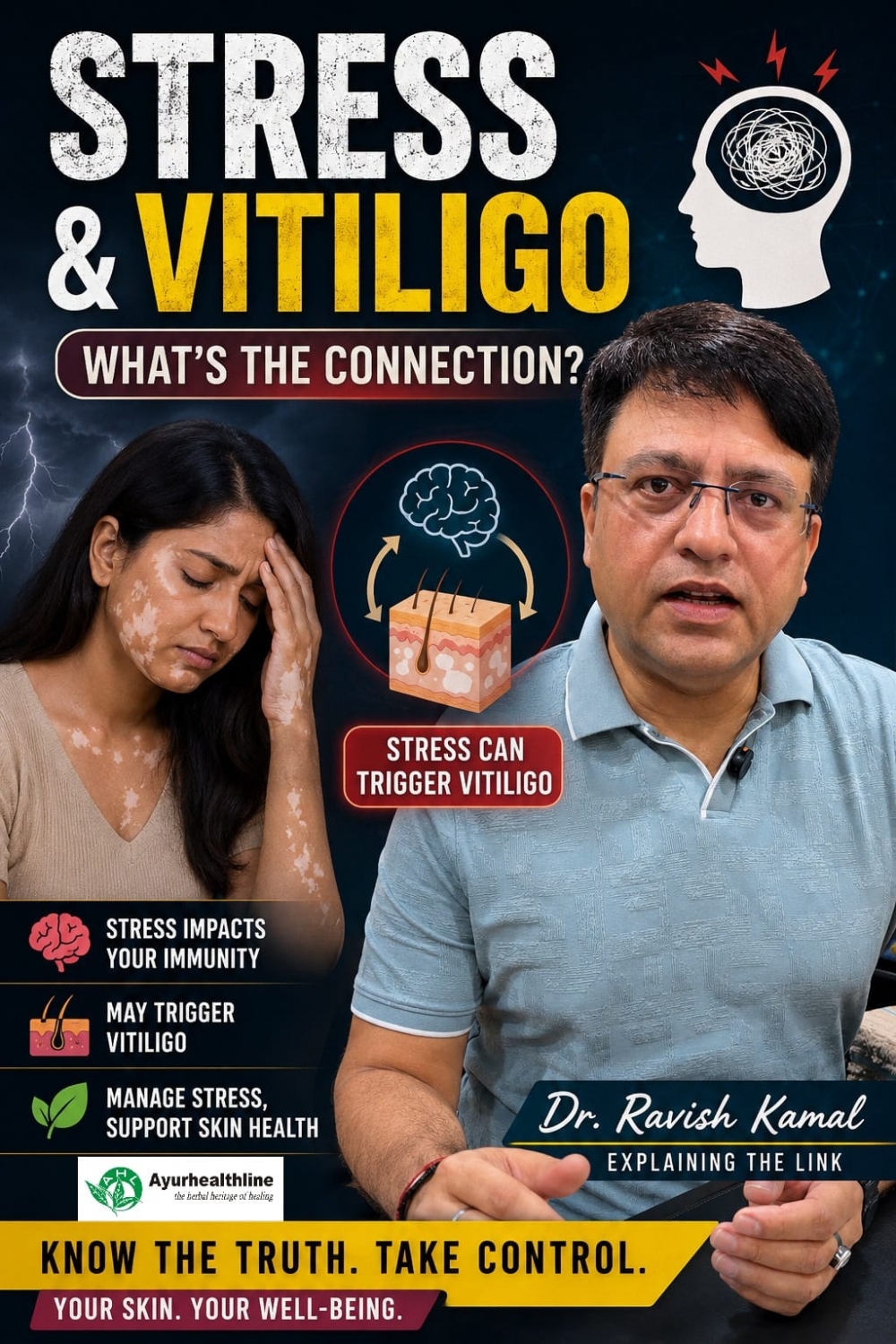
8. Stress/ Depression-
· Prolonged condition of depression caused by various factors like over thinking etc. can have adverbs effects of immune behaviour in some cases.
· These may result into auto immune trigger and disease like vitiligo could occur.
FREQUENTLY ASKED QUESTION ABOUT VITILIGO FAQ:
1. What is the main cause of vitiligo?
The most common cause of vitiligo is an autoimmune reaction in which the immune system mistakenly attacks the pigment-producing cells (melanocytes), leading to white patches on the skin.
2. Can stress cause vitiligo?
Stress may not directly cause vitiligo, but severe emotional or physical stress can trigger or worsen the condition in some people by affecting immune responses.
3. Is vitiligo genetic?
Yes, vitiligo can have a genetic component. Around 20–30% of people with vitiligo may have a family member with the condition.
4. What triggers vitiligo to start?
Vitiligo may be triggered by autoimmune activity, genetic predisposition, stress, skin injury, or exposure to certain chemicals.
5. Can vitiligo spread quickly?
Vitiligo progression varies. Some people experience slow changes, while others may see faster spread depending on immune activity and triggers.
6. What foods should vitiligo patients avoid?
Some patients choose to avoid highly processed foods and maintain a balanced diet rich in antioxidants, vitamins, and minerals to support overall skin health.
7. Can vitamin deficiency cause vitiligo?
Deficiencies in nutrients such as vitamin B12, folic acid, or copper may affect skin health and have been observed in some vitiligo patients.
8. Is vitiligo contagious?
No. Vitiligo is not contagious and cannot spread from one person to another through touch or contact.
9. At what age does vitiligo usually start?
Vitiligo often appears before the age of 30, but it can develop at any age.
10. Can vitiligo stop spreading on its own?
In some cases, vitiligo may stabilize without further spread. However, the course of the condition varies among individuals.
11. What are the early signs of vitiligo?
Early signs include small white patches on the skin, loss of pigment around the lips or fingers, or whitening of hair in affected areas.
12. Can skin injury trigger vitiligo?
Yes. Skin trauma such as cuts, burns, or friction may trigger vitiligo patches in some people due to the Koebner Phenomenon.
13. Can chemical exposure cause vitiligo?
Certain chemicals used in dyes, rubber, or cosmetics may damage melanocytes and trigger vitiligo in susceptible individuals.
14. Is vitiligo related to autoimmune diseases?
Yes. Vitiligo is often associated with other autoimmune conditions such as Thyroid Disease.
15. Does sunlight affect vitiligo?
Sunlight can make vitiligo patches more noticeable because the surrounding skin tans while depigmented areas remain white.
16. Can vitiligo appear suddenly?
Yes. Some people notice sudden appearance of white patches due to immune activity affecting pigment cells.
17. Is vitiligo permanent?
Vitiligo is a long-term condition, but treatments may help restore pigment or stabilize the disease in many patients.
18. Which parts of the body are most affected by vitiligo?
Common areas include the face, hands, elbows, knees, feet, and areas around body openings.
19. Can children develop vitiligo?
Yes, vitiligo can occur in children and may start as small white patches on the skin.
20. Can vitiligo be managed naturally?
Some people explore lifestyle approaches, stress management, and supportive therapies along with medical advice to help manage vitiligo.