
We understand the complex nature of Vitiligo and Leucoderma.
Ayurhealthline is dedicated only to Vitiligo sufferers and has been serving them across the world for more than 19 years.
Vitiligo & Leucoderma are often viewed more as social disorders with less medical importance since their impact is generally their visibility on the body and appearance. Due to this they can create tremendous pressure on sufferers' mental health. They may feel self-conscious as people respond to how they look. Handling this pressure positively, together with the correct choice of treatment, is the key to success behind complete Vitiligo cure. Expand...
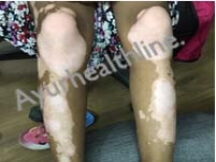
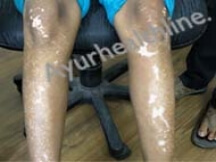
.jpg)
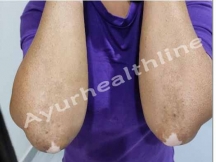
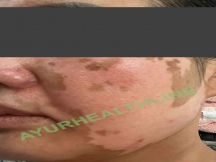
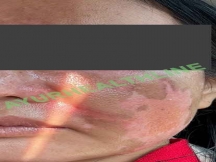
9th April 2024, Its been 5 months, I am getting treated with Ayurhealthline Dr.Ravish.. Initially for 2 months I got results as small pinned brown colour spots came on my 2 of spots. Now in 5 months I am feeling better as 50% of spot gone. Thanks for the medicines, Doctor. Your food restriction details are unique and minute which helped in recovery a lot.
July 20th, 2023 - A great thanks to Dr.Ravish from Bangaluru. I was skeptical about taking online treatment for my vitiligo as i was far from Delhi and reside in Bangaluru but after seeing website and having consultation with doctor Ravish i finally took step and started my vitiligo treatment from Ayurhealthline as his knowledge about vitiligo is convincing. The depth of vitiligo knowledge he has is amazing. Now after 8 months of treatment i am more than 90% cured of vitiligo. I am sure the remaining patch will vanish in 2-3 more months. Ayurveda is the only medicine fit for vitiligo. specially with Ayurhealthline i am getting vitiligo free life. Many thanks Doctor Ravish.
January 9th, 2023. Hi.. used your kit for 4 months till now and my eye spot has reduced to 50% now. Hope for more faster recovery. Please do the needful Dr.Ravish. You are so helpful, and I really appreciate your personal attention on each patient that you give. Your dedication for vitiligo patients is awesome. Now I do realise that to what extent a customized vitiligo treatment can help. Thanks for everything you are doing. Take care Doc.
November 4th, 2022, Hello Dr. Ravish its been 2 months since I started your healing program. I see small progress on my white vitiligo spots. There are several dark freckle-like dots forming and I believe my chin white spots are getting smaller and changing form. My forehead is only now starting to form some freckles and my sides of my face have developed pink dots. I believe I need to get more medicine from you. I also gave couple more questions: 1) I have the Daavlin vitiligo light machine, do you recommend light therapy along with the program? I had some temporary re-pigmentation succession the past with it. 2) it’s persimmon season here in USA, and these are some of my favourite fruits, are the permitted or restricted fruit?
September 22nd , 2021, Hi... I have been taking this treatment for 8 to 9 months now and it is working well for my vitiligo condition. Thanks for the help, Dr.Ravish. Bangalore weather sometimes created itching on my vitiligo spots but precise advice from Dr. solved that issue. I must mention that promptness on call and whatsapp by Ayurhealthline is the next level. You always replied to my conversations professionally and it is easy, fast & helpful too. God bless you.
June 15th 2020, Hello everyone. I started observing vitiligo around 18 years back in small patches. From that time I consulted many doctors. Be it homeopathic, Ayurvedic, Allopathic. Took different medicine but all in vain. For time being its cure but again it appear. Somehow I came to know about Ayurhealthline Vitiligo treatment of Dr. Ravish surfing from net. Thought to give it a chance also. But trust me it really worked as miracles because from most of the people I always heard that it’s not possible. But I am thankful and grateful to Ayurhealthline for giving me 80% positive results in just 4 months. I always get immediate response from Dr. Ravish as well as from front desk. I have now more faith that it will be cured completely. Thank you sir for improving my confidence. Bharti Chauhan, Pune
MAY 4th 2019, I am so glad that I learned about Dr. Kamal Ravish while checking all kind of treatments for this vitiligo problem through the internet. He has been a Godsend to us when we were so stressed about our son. His Ayurvedic treatment is amazing. Whereas for this skin problem there is no treatment in Allopathy. I am so grateful to Dr. Kamal. I took all the care which was told by Dr. Kamal and after almost 1.5 yrs his this problem is almost cured. Everything was so smooth it communication with Dr. Kamal as he is always prompt with the answers to any questions or be it getting medicine on time though we are in the US.Kay Botanicals I Highly recommend his treatments, even I want to spread this as I have seen so many people struggling with this problem and still don't know how to get out of this stressful situation. Thank you so much Dr. no words can suffice the gratitude we have towards you.
March 10th 2019, I am here to share my superb experience with this clinic. Dr. Ravish Kamal is not less than any god to me and my family. With some doubts and anxiety in starting of the treatment , as the time pass on and my skin problem started getting improved my faith in the whole treatment increased gradually. I am highly obliged to Dr Ravish kamal for serving people like me and many others. You are really a god sent person.I really want anyone reading my comment to have faith and go there if you have same problem you will not get disappointed. Thankyou doctor for your treatment.
October 3rd, 2018 . Dear Dr Ravish, Hello! It's been 2 month and 2 weeks since I undergone taking up your medicines, this coming October 18 is my 3rd month and I have noticed that your products are doing very well. The white patches turned pinkish in color, black spot started to appear, it shows a great improvement .I am happy to see the result and hoping that it would completely covered the depigmented area soon. Hats off on you Doctor Ravish!
May 17th, 2017, "We noticed spots on our little child's body, we had no idea what was going on; after a year noticing few more spots appearing, we searched for an ayurvedic doctor from India online. Dr. Ravish came to our attention. We contacted Dr. Ravish, and he made it very easy to understand what vitiligo is; and made us feel comfortable to build trust with his Ayurvedic treatment. We followed all his instructions carefully and did treatment for more than a year and finally he brought a smile on our child's face. The marks started fading away, and today we firstly Thank God who brought such a great doctor to us. Thank you Dr. Ravish, may God bless you." Om Namah Shivay.
April 14th, 2017. Hi everyone, Im Revathi From Malaysia. My mother notice some white patches behind my ear on March 2016. I have consume some modern medicine with cream to apply. After six months of consumptions the white patches started to fade and gone. But its started again at my lips. I become to worried because the Dr dosent promise me fully recovery. Then i have notice Ayurhealthline Vitiligo Treatment Kid through internet. I have consume the treatment kid for 3 months rite now and its shows lots of imporvement on my lips. black spot starting to apper after few weeks of consumptions. now its almost 70% cured. Only 30% more to go. Me and my family strongly recomened Vitiligo Treatment Kit. Its give back my inner strength to me. Thank you so much Dr. Ravish for being there to guide me always. Thank you. Regards; Revathi. - Obtained from our Google Business Page.
June, 30th 2016. I'm already two months with the treatment and I have pigmentation results . I am very happy with your product. now I am writing to request that you make me the quote to continue treatment for months 4 , 5 and 6. In the same way I require shipping via DHL. I require you to confirm me if valid data continue to perform the transfer in the first purchase of treatment for three months according to the attachment. I will be attentive to your answer.
December 15th, 2015. Hello doctor,I just make the payment of my second order. I will send you pictures after 4 months of treatment for you to see the progress ; I authorize you to publish these pictures on your site to show the effectiveness of your treatment. Doctor, I know someone who has lupus erythematosus , she suffers a lot , do you treat this disease ? Thank you for your answer. Best regards. Nadia Bonjour Docteur, Je viens d'effectuer le paiement de ma commande Je vous enverrai des photos après 4 mois de traitement pour que vous puissiez voir la progression ; je vous autorise à publier ces photos sur votre site pour montrer l'efficacité de votre traitement. Docteur, je connais une personne qui a un lupus érythémateux, elle en souffre beaucoup, est-ce que vous soignez cette pathologie? Merci pour votre réponse. Cordialement. Nadia
October 16th, 2015. Hello Dr kamal!! It has been a long time since I have consulted you on my vitiligo procedure!! Thankfully there has been good progress with dark spots appearing on my hands and armpits and other parts which is great as normally there would be no progress in these areas!! I was just wondering on how the treatment works? I was thinking about it and I thought that the body would produce all the white patches in the body where there is dead melanin and they would be re pigmented back to my skin colour. This would prevent the vitiligo from spreading and would cure it so that it wouldn't come back again! I'm not sure if this is correct, but I was just wondering how it works as the progress being made is so good that I am amazed that no other doctor could think of such a easy life saving cure!!! Thank you so much again !! You and your treatment have reassured me into believing that my vitiligo will eventually go away and that it won't happen again!! I am going to order another pack of treatment hoping that It would keep changing my vitiligo and having significant progress of re-pigmentation!!!!
August 18th, 2015. I have been taking the Vitiligo treatment for 6 mths & have seen marked improvement. My query is, I want to buy ONLY the Oral capsules not the topical because I have plenty supply of the topical which will last me for 2yrs!! Can I order for just the oral capsules which are: Anti-Vitiligo Capsules Pigment Catalizer Capsules Immuno Capsules. Look forward to hearing from you soon.
Hello Dr, This is Hari & Sowmya, Nivriti's parents. We wanted to thank you for the treatment which you had suggested to my daughter 3 months ago,we see significant improvement in the treatment which you had suggested and we hardly now see the spot.We are still continuing the medication. Attached is her recent photo which we took yesterday.Also,attached are the initial photos which I sent to you before starting the treatment. I think we still have another month of medicine left, we want your advice on what are the next steps moving forward,so that it doesn't return again. Once again, Thank you .You made our life really happy. Hari & Sowmya
ISO 9001:2015 CERTIFIED CLINIC
Vitiligo Specialty clinic of its kind. Successfully treating Vitiligo & Leucoderma patients for the last 19 years Worldwide.
100% Ayurvedic Vitiligo Treatment customized for individual cases. Special treatment program for small kids. Safe enough as Herbal.
Vitiligo Online Consultation & Vitiligo specialist chat consultation available across World.
Live chatting and option of Real time Free Video consultation with Herbal Vitiligo Specialist Dr.Ravish kamal, B.A.M.S. "DABUR AWARDED" on demand
More than 90% patients treated online across the World with high success rate of Vitiligo & Leucoderma treatment by Ayurveda.
Customized treatment & medicines according to climate, country weather and Body property type for accurate results.
Please note that this website is not a product selling website. This website is a medium for patients to consult for authentic Ayurvedic (herbal) treatment of Vitiligo and Leucoderma in which a patient gets online or personal support from a qualified Govt. Registered B.A.M.S. doctor during treatment after filing free online consultation.
Please note that we do not claim to cure each and every case, nor do we guarantee any magical cure...
Disclaimer *Results may vary person to person*